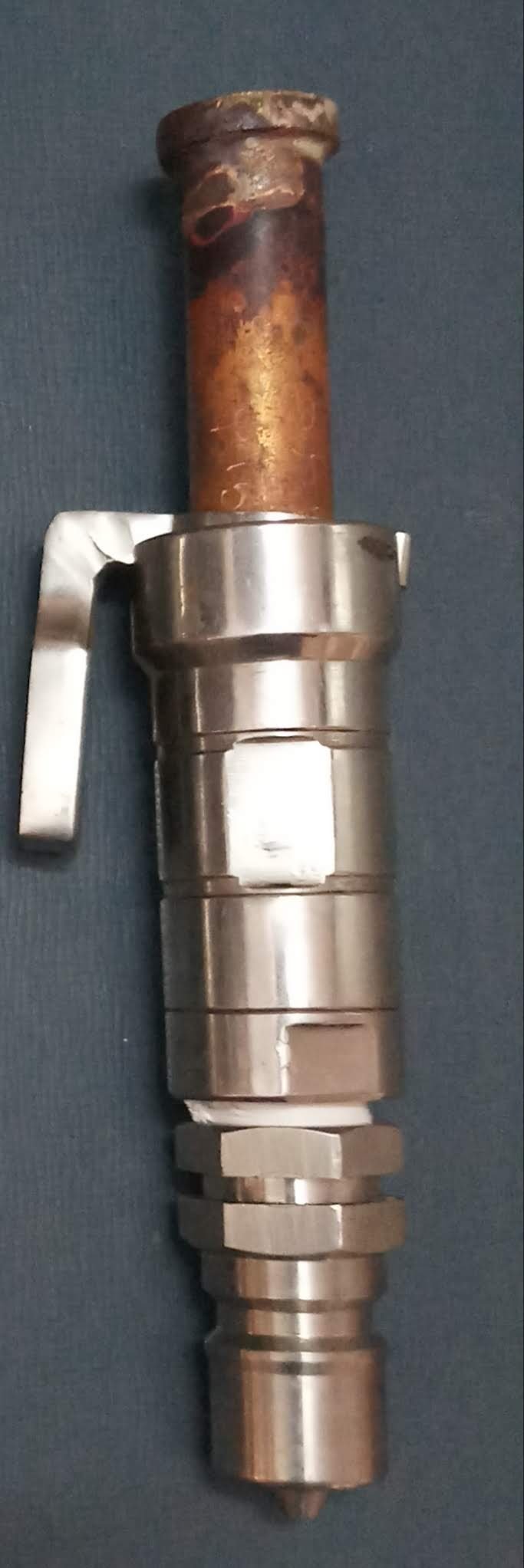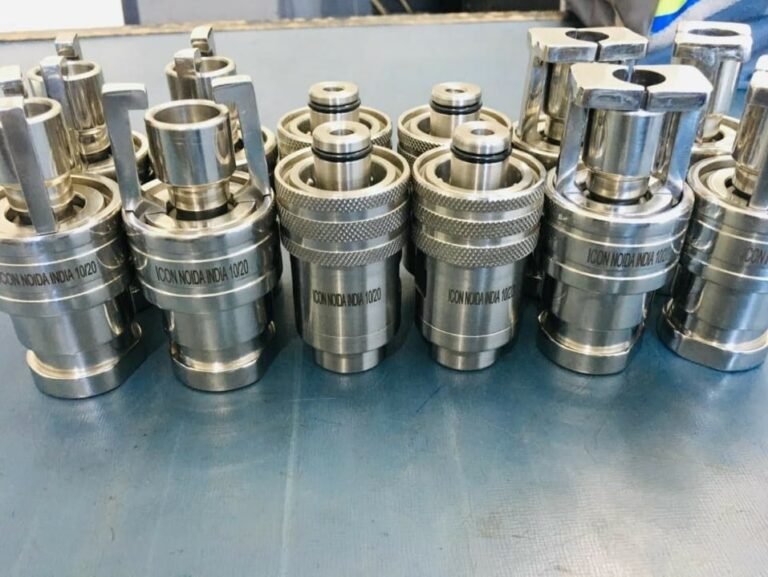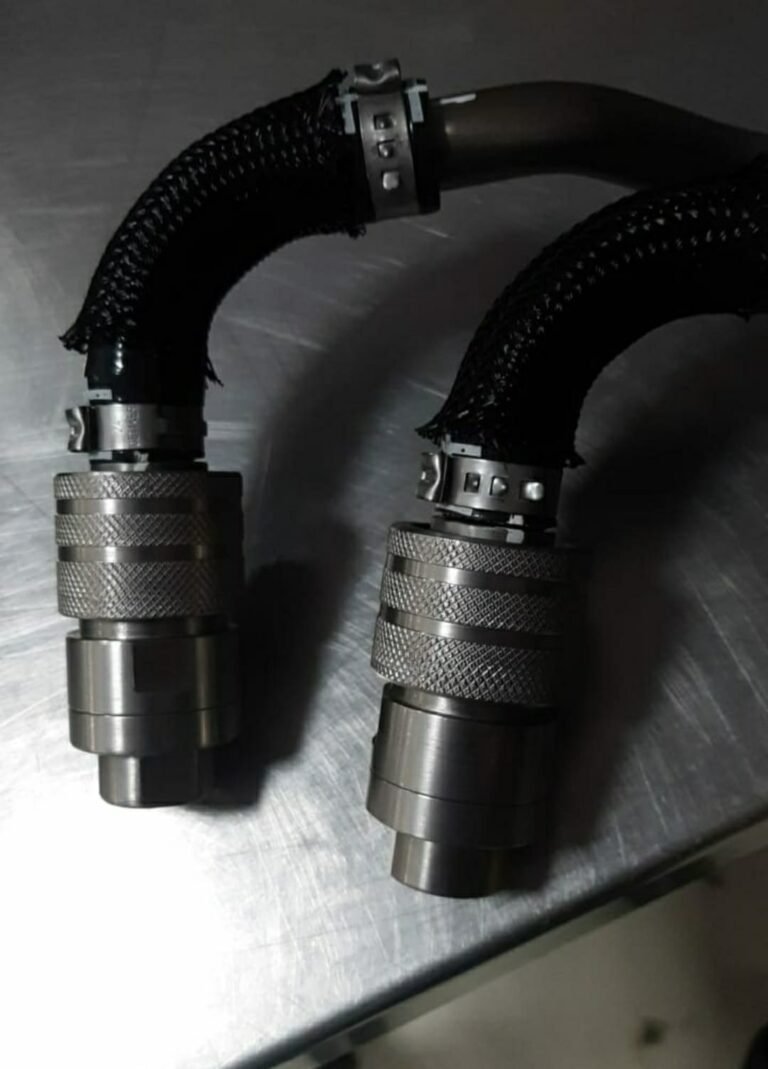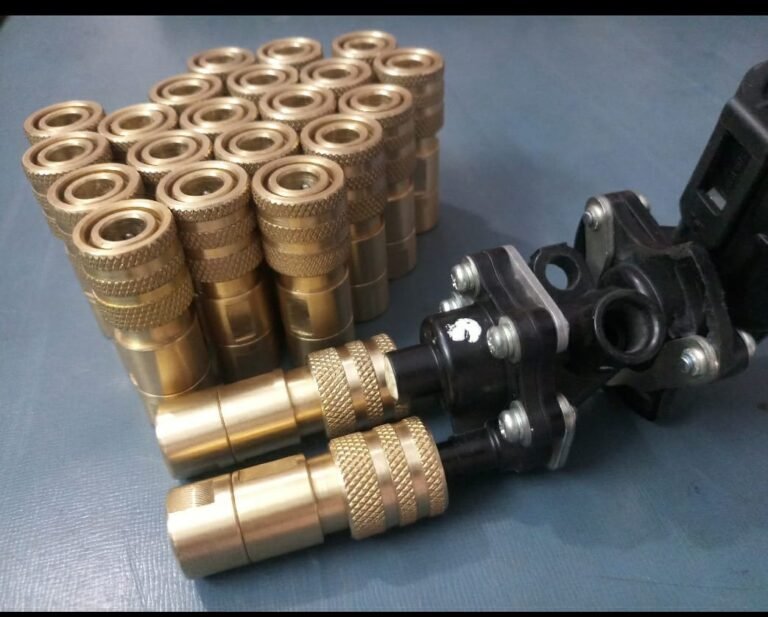
A reliable connection is essential in any system that transfers liquids, chemicals, powders, air, or other materials through hoses and pipelines. Traditional threaded connections can take time to install and may require tools, especially when hoses need to be connected and disconnected frequently. This is where a camlock coupling offers a simple and practical solution.
Also known as cam and groove couplings, these connectors are designed for quick hose and pipe connections without requiring a wrench for the coupling mechanism. Different camlock coupling types are available to match different hose ends, pipe threads, and equipment connections. Among them, Types A, B, C, D, E, and F are widely recognized configurations.
In this guide, we will understand the construction, applications, and differences between each type of camlock fitting, along with important factors to consider when selecting camlock couplings.
What Is a Camlock Coupling?
A camlock coupling is a quick-connect fitting used to join hoses, pipes, tanks, pumps, and other fluid-handling equipment. It generally consists of two mating parts: an adapter and a coupler.
The coupler contains cam arms on the sides. When the adapter is inserted into the coupler and the cam arms are closed, the two components lock together. The internal gasket creates the required seal between the mating surfaces.
One of the biggest advantages of this design is that the connection can usually be made and released by hand without using specialized tools. This makes camlock couplings particularly useful in applications where hoses are frequently changed.
Also Read: Quick Coupling vs Threaded Fitting: Which Is Right?
Understanding Camlock Coupling Types A to F
The main difference between the standard camlock coupling types is the type of connection available on each half. Although the cam-and-groove locking principle remains similar, the opposite ends can be configured with male threads, female threads, or hose shanks.
Let’s look at Types A through F individually.
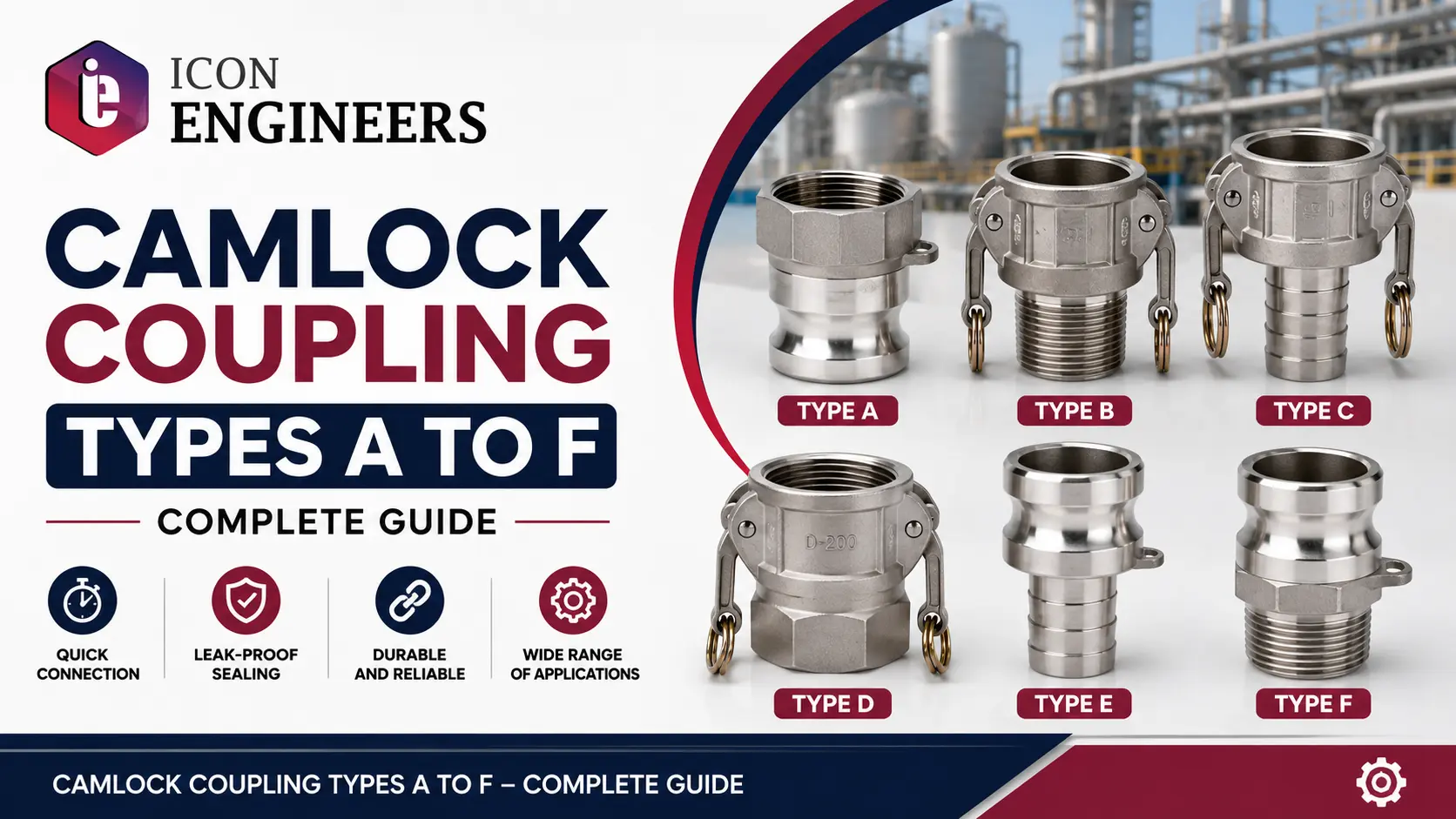
Type A Camlock Coupling
Type A has a male adapter on one end and a female threaded connection on the other end. The male adapter is designed to connect into a compatible camlock coupler, while the female threaded side connects to a male threaded pipe, valve, or equipment port.
Type A is useful when a threaded equipment connection needs to be converted into a quick-connect camlock arrangement.
Common applications include:
- Industrial fluid transfer
- Water handling systems
- Pumps and tanks
- Chemical processing
- Agricultural equipment
- General-purpose hose connections
The exact thread standard should always be checked before installation to ensure proper compatibility.
Type B Camlock Coupling
Type B features a female camlock coupler with a male threaded connection. It is essentially used when a hose or pipeline needs to connect quickly to equipment having a female threaded port.
The threaded end can be connected to a compatible female thread, while the camlock side provides the quick-connect function.
Type B cam lock fittings are commonly used in industrial piping, fluid transfer equipment, agricultural applications, and temporary pipeline arrangements.
When selecting Type B, verify the thread size and standard as well as the pressure and temperature requirements of the system.
Type C Camlock Coupling
Type C is designed with a female camlock coupler and a hose shank. The hose is installed over the shank and secured using an appropriate clamp or fastening arrangement.
This makes Type C particularly convenient for flexible hose applications where frequent connection and disconnection are required.
Typical applications include:
- Water transfer
- Fuel handling
- Industrial hoses
- Agricultural irrigation
- Tanker loading and unloading
- Pumping systems
The hose inside diameter should match the shank size correctly. A properly selected clamp is also important for maintaining a secure hose connection.
Type D Camlock Coupling
Type D consists of a female camlock coupler with a female threaded connection. It is suitable for connecting a male threaded component to a camlock adapter.
This configuration is commonly used where the equipment side has a male thread and the operator wants a quick-disconnect arrangement on the other side.
Type D camlock couplings are available in different sizes and materials to suit a variety of industrial applications. Before choosing one, consider the working pressure, fluid compatibility, thread type, and operating temperature.
Type E Camlock Coupling
Type E has a male camlock adapter with a hose shank. It is commonly paired with Type C couplers to create a quick-connect hose assembly.
The hose is fitted over the shank and secured using a suitable clamp. The male adapter then connects into the corresponding female camlock coupler.
Type E is widely useful for flexible hose systems where quick connection and disconnection are required. Water transfer, agriculture, industrial processing, and general fluid handling are some common application areas.
The hose material, operating pressure, and fluid being transferred should be considered when selecting the fitting.
Type F Camlock Coupling
Type F features a male camlock adapter with a male threaded connection. It can be used where a male threaded equipment connection needs to interface with a female camlock coupler.
Type F is often selected for industrial fluid transfer arrangements, piping systems, pumps, tanks, and other equipment where threaded connections and quick-connect systems need to work together.
As with other camlock fittings, thread compatibility is critical. Metric, BSP, NPT, and other thread standards should not be assumed to be interchangeable.
Camlock Coupling Types A to F at a Glance
| Type | Camlock Side | Other Connection | Common Use |
|---|---|---|---|
| Type A | Male Adapter | Female Thread | Threaded equipment connection |
| Type B | Female Coupler | Male Thread | Equipment-to-hose connection |
| Type C | Female Coupler | Hose Shank | Flexible hose applications |
| Type D | Female Coupler | Female Thread | Threaded piping systems |
| Type E | Male Adapter | Hose Shank | Quick-connect hose assemblies |
| Type F | Male Adapter | Male Thread | Threaded equipment integration |
This classification makes it easier to identify the right camlock fitting according to the connection required on each side.
Common Materials Used for Camlock Couplings
Camlock couplings are manufactured from different materials depending on the application and fluid being handled.
Aluminium: Lightweight and commonly used for general-purpose fluid transfer applications.
Stainless steel: Suitable for applications requiring excellent corrosion resistance and durability.
Brass: Often selected for water, air, and other general industrial applications where brass compatibility is appropriate.
Polypropylene: Lightweight and useful for certain chemical and corrosive fluid applications, depending on compatibility.
Material selection should always consider the transferred fluid, temperature, pressure, environmental conditions, and required service life.
Advantages of Camlock Couplings
There are several reasons why industries choose camlock couplings for hose and pipeline connections:
- Quick connection and disconnection
- Usually no wrench required for the cam mechanism
- Simple and practical operating design
- Reduced maintenance time
- Suitable for frequently changed hoses
- Available in different materials and sizes
- Multiple connection configurations
- Easy integration with tanks, pumps, and pipelines
- Suitable for many industrial fluid-transfer applications
- Available with different thread and hose-end arrangements
Where Are Camlock Couplings Used?
Camlock fittings are used in a wide range of industries and equipment. Common applications include water transfer systems, agricultural irrigation, chemical handling, petroleum and fuel transfer, industrial processing, construction equipment, tank farms, dewatering systems, pumps, and temporary piping arrangements.
Their quick-connect design is particularly helpful in applications where hoses must be moved, replaced, cleaned, or disconnected regularly.
How to Select the Right Camlock Fitting?
Selecting the correct fitting involves more than simply choosing Type A, B, C, D, E, or F. Consider the following factors:
- Connection type: Determine whether you need a threaded connection or hose shank on the equipment side.
- Size: Select the correct nominal size according to the hose, pipe, and required flow.
- Material: Choose a material compatible with the transferred fluid and working environment.
- Pressure rating: Confirm that the selected coupling can safely handle the system’s operating pressure.
- Temperature: Check the temperature capability of the coupling and gasket.
- Gasket compatibility: The gasket material should be suitable for the fluid and operating temperature.
- Thread standard: Confirm whether the connection uses NPT, BSP, metric, or another thread standard.
- Application environment: Outdoor, corrosive, high-vibration, and heavy-duty applications may require specialized materials or designs.
Final Thoughts
Understanding camlock coupling types makes it easier to select a suitable connection for industrial hose and fluid-transfer systems. Types A through F cover several common combinations of male adapters, female couplers, threaded ends, and hose shanks.
Type A and Type D are useful for female-threaded connections, Types B and F provide male-threaded configurations, while Types C and E are commonly used with hose assemblies. The right choice ultimately depends on the equipment connection, hose size, material compatibility, pressure, temperature, and application requirements.
A properly selected camlock coupling can make hose handling faster and more convenient while reducing unnecessary maintenance time. Whether you need standard cam lock fittings for water transfer or specialized camlock fittings for industrial applications, always verify the complete operating requirements before installation.