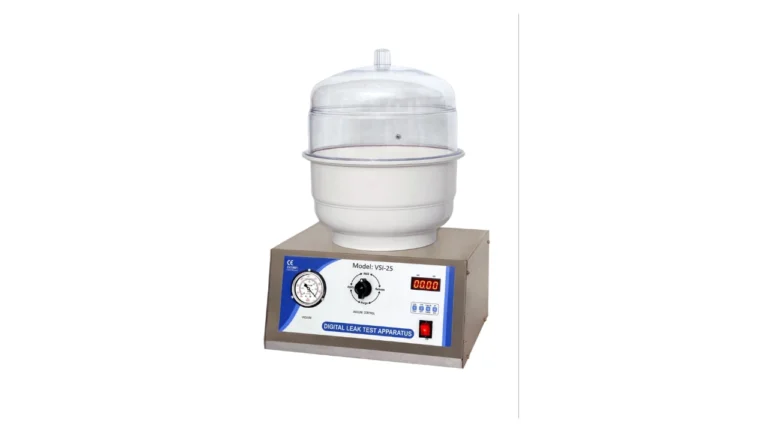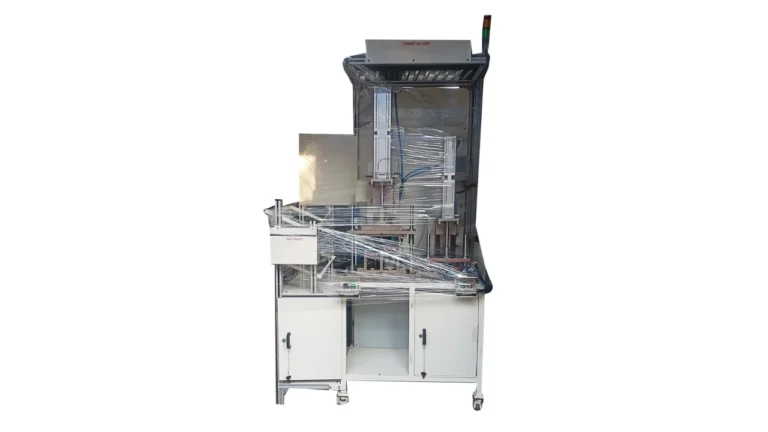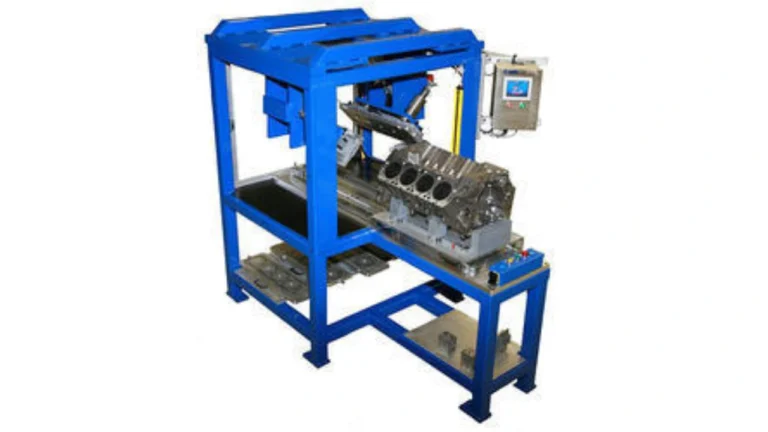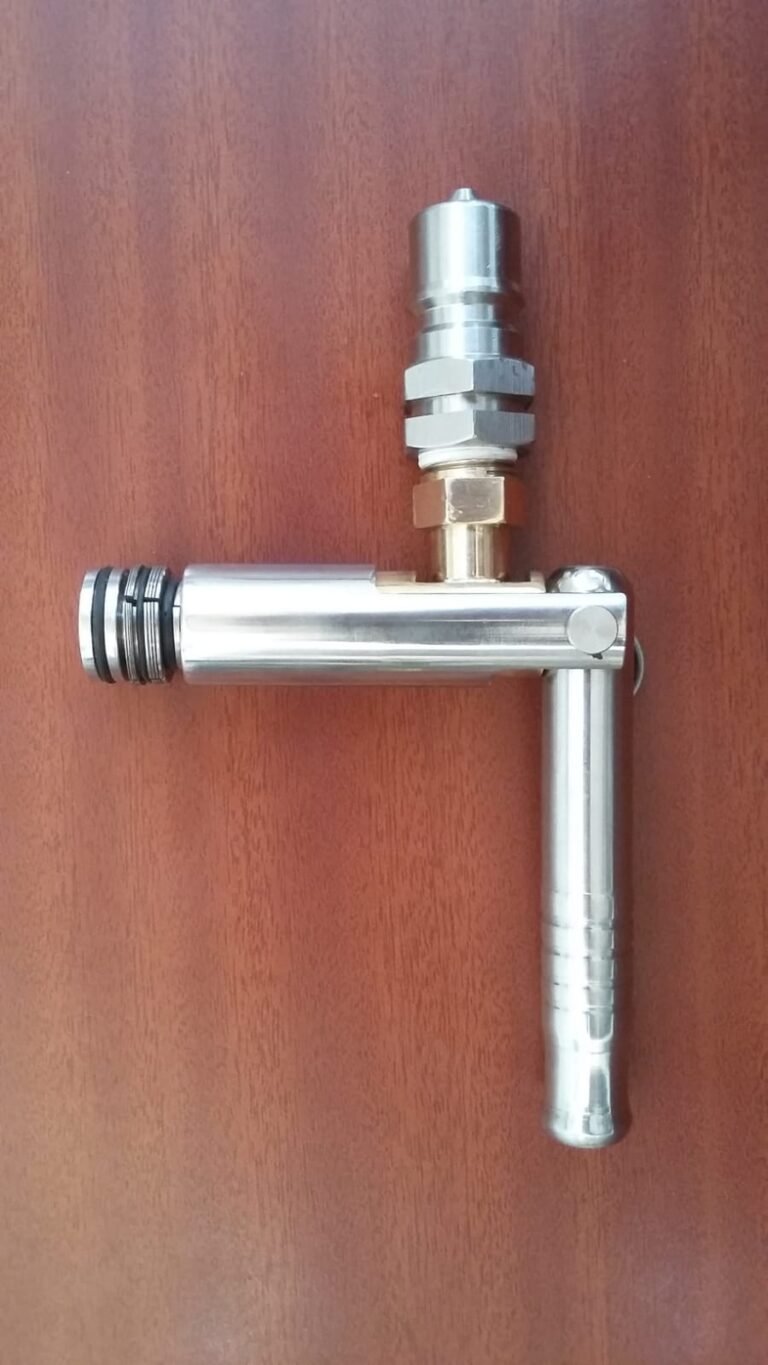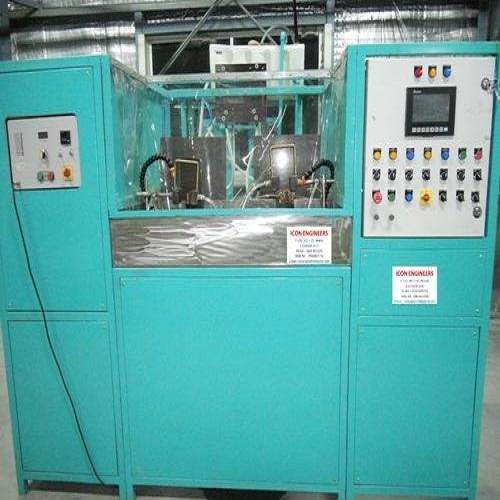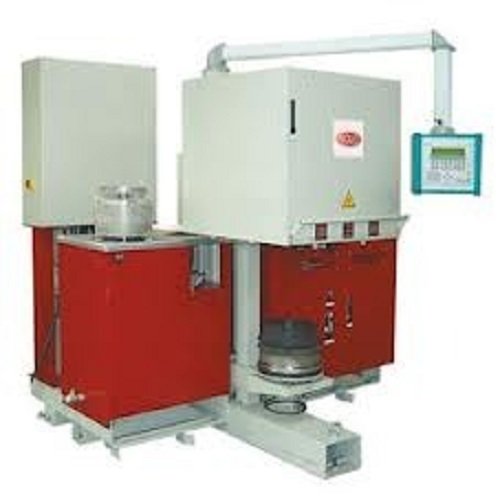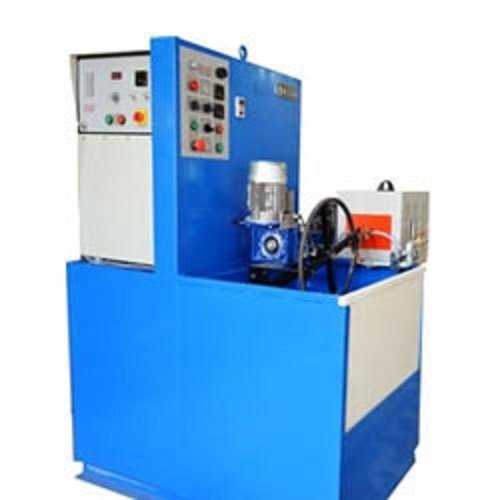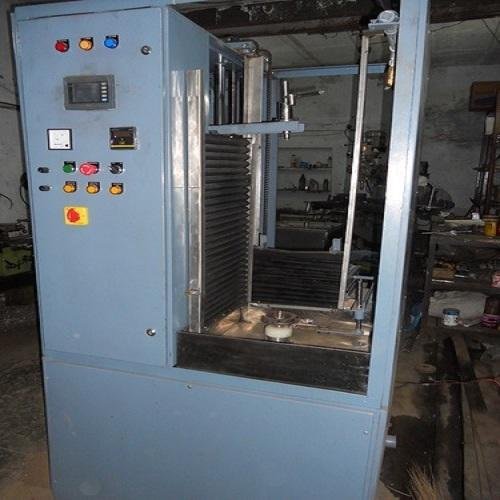
Leak testing plays a crucial role in ensuring the safety, reliability, and performance of industrial products and systems. Whether it’s automotive components, pipelines, pressure vessels, HVAC systems, medical devices, or consumer products, identifying leaks before a product reaches the market is essential. Even a small leak can lead to product failure, increased maintenance costs, safety hazards, and customer dissatisfaction.
Among the various leak detection methods available today, Air Leak Testing and Water Leak Testing are the two most commonly used techniques. While both methods aim to detect leaks, they differ significantly in terms of working principles, accuracy, testing speed, applications, and overall efficiency.
In this guide, we’ll provide a complete comparison between Air Leak Testing vs Water Leak Testing, helping manufacturers choose the most suitable leak testing method for their production requirements.
What is Air Leak Testing?
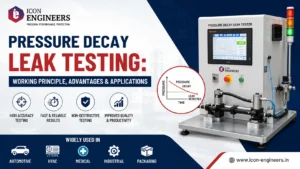
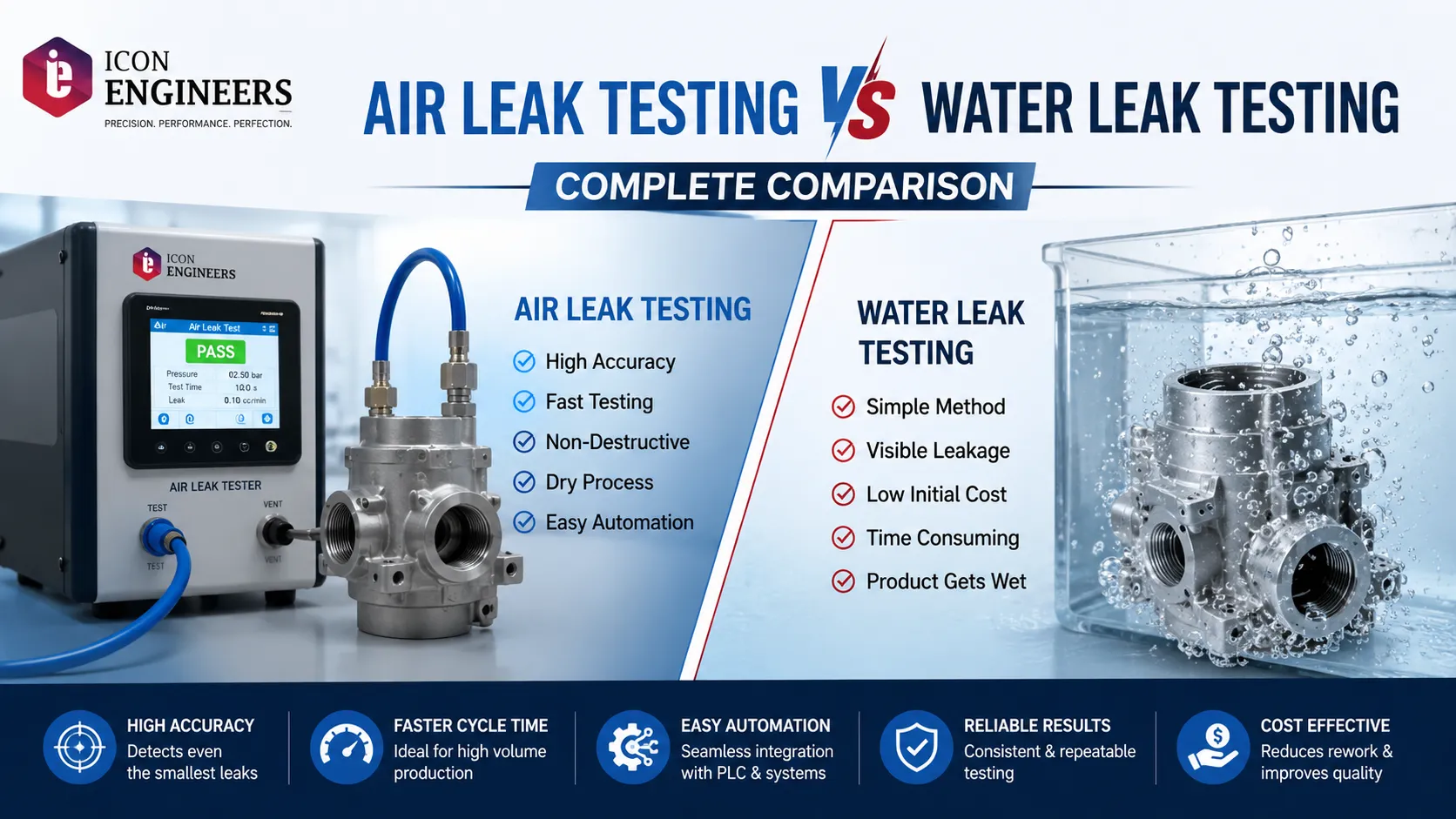
Air Leak Testing is a non-destructive testing method used to detect leaks by pressurizing a component with air or another gas and monitoring pressure changes or airflow. If the pressure drops beyond the acceptable limit, it indicates the presence of a leak.
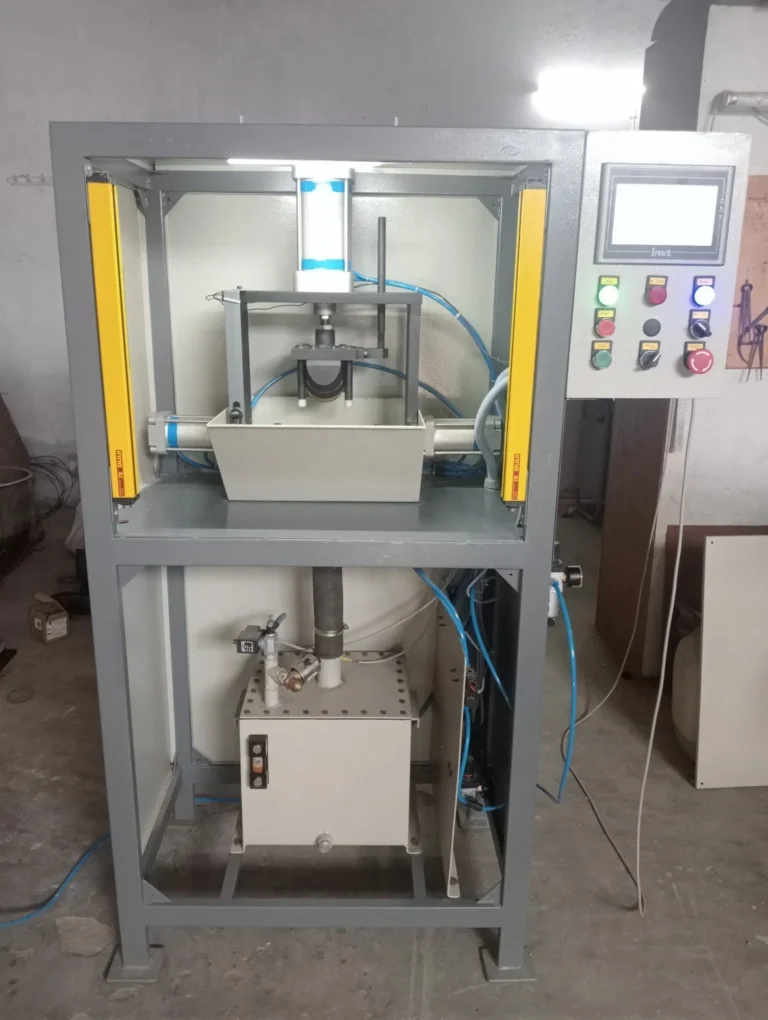
Modern air leak testing systems use advanced pressure sensors, differential pressure technology, or flow measurement techniques to identify even extremely small leaks with high accuracy. Since the product remains dry during testing, Air Leak Testing is widely used in automated manufacturing environments where speed, cleanliness, and precision are critical.
What is Water Leak Testing?
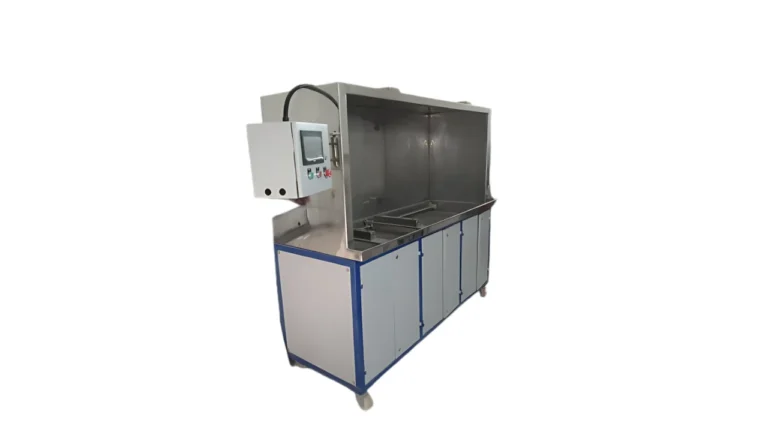
Water Leak Testing is a traditional leak detection method in which a component is filled or submerged in water to identify leakage. One of the most common techniques is the bubble test, where air is introduced into the component while it is immersed in water. Escaping air bubbles indicate the location of the leak.
Another method involves filling the component with water and observing any visible leakage over time. Although Water Leak Testing is simple and cost-effective, it is generally more suitable for basic inspections rather than high-precision industrial testing.
Also Read: Water Leak Detector Machine Price
Air Leak Testing vs Water Leak Testing: Key Differences
Understanding the differences between these two methods helps manufacturers make informed decisions.
| Feature | Air Leak Testing | Water Leak Testing |
|---|---|---|
| Testing Method | Uses compressed air or gas | Uses water immersion or water filling |
| Accuracy | Very high | Moderate |
| Leak Detection | Detects extremely small leaks | Suitable for larger visible leaks |
| Product Condition | Product remains dry | Product becomes wet |
| Testing Speed | Fast | Slower |
| Automation | Easily automated | Limited automation |
| Production Suitability | High-volume manufacturing | Low to medium production |
| Maintenance | Minimal cleanup | Requires drying and water disposal |
| Environmental Impact | No water consumption | Requires water usage |
| Repeatability | Excellent | Depends on operator skill |
Advantages of Air Leak Testing
High Accuracy
Air Leak Testing can detect extremely small leaks that may not be visible during water testing.
Fast Testing Cycle
The process is completed within seconds, making it ideal for automated production lines.
Clean and Dry Testing
Since no water is involved, products remain dry and are immediately ready for assembly or packaging.
Easy Automation
Air Leak Testing systems integrate seamlessly with PLCs, robotic systems, and automated manufacturing lines.
Non-Destructive Method
The component remains completely intact throughout the testing process.
Cost Savings
Reduced rework, faster testing, and lower labor requirements contribute to long-term cost savings.
Advantages of Water Leak Testing
Simple Procedure
The testing process is easy to understand and requires minimal training.
Lower Initial Investment
Basic Water Leak Testing equipment is generally less expensive than advanced automated systems.
Visible Leak Location
Air bubbles make it easy to identify the exact location of larger leaks.
Suitable for Basic Testing
It works well for applications where ultra-high precision is not required.
Limitations of Air Leak Testing
Although highly effective, Air Leak Testing has some considerations.
- Higher initial equipment cost.
- Requires proper calibration.
- Testing parameters must be carefully controlled.
- Compressed air supply is necessary.
Despite these factors, its long-term operational benefits usually outweigh the initial investment.
Limitations of Water Leak Testing
Water Leak Testing also has several limitations.
- Products require drying after testing.
- Difficult to automate for mass production.
- Small leaks may go undetected.
- Water can contaminate sensitive components.
- Higher maintenance due to water handling.
- Slower production cycles.
These limitations make Water Leak Testing less suitable for modern high-speed manufacturing environments.
Applications of Air Leak Testing
Air Leak Testing is widely used across numerous industries.
Automotive Industry
Testing fuel tanks, radiators, brake systems, air conditioning components, and engine parts.
Medical Devices
Leak testing syringes, catheters, filters, and medical equipment.
Electronics
Testing sealed electronic enclosures and waterproof devices.
HVAC Industry
Inspecting heat exchangers, compressors, valves, and refrigeration components.
Consumer Products
Testing bottles, containers, packaging, and household appliances.
Industrial Manufacturing
Quality testing of valves, pumps, cylinders, pressure vessels, and pneumatic components.
Applications of Water Leak Testing
Water Leak Testing is commonly used for:
- Pipes and plumbing systems
- Water tanks
- Large fabricated structures
- Low-pressure components
- Construction applications
- Basic maintenance inspections
Which Leak Testing Method Should You Choose?
The right choice depends on your production requirements.
Choose Air Leak Testing if you need:
- High precision
- Fast testing
- Automated production
- Dry testing process
- Consistent quality control
- High-volume manufacturing
Choose Water Leak Testing if:
- Budget is limited.
- Products are large and simple.
- Basic leak detection is sufficient.
- Drying after testing is not a concern.
For modern manufacturing environments focused on quality, productivity, and automation, Air Leak Testing is generally the preferred solution.
Future of Leak Testing
With Industry 4.0 and smart manufacturing becoming the new standard, leak testing technology continues to evolve.
Modern Air Leak Testing systems now include:
- IoT connectivity
- Real-time monitoring
- Digital reporting
- AI-assisted diagnostics
- Automatic pass/fail decisions
- Cloud-based quality management
- Data logging and traceability
These advancements improve production efficiency while ensuring consistent product quality.
Why Choose Icon Engineers?
When it comes to reliable leak testing solutions, Icon Engineers is a trusted partner for industries across India. We specialize in designing and manufacturing advanced Air Leak Testing Systems that deliver exceptional accuracy, repeatability, and production efficiency.
Why choose Icon Engineers?
- Advanced Air Leak Testing technology
- Customized leak testing solutions
- High testing accuracy
- Fast inspection cycles
- Easy PLC and automation integration
- User-friendly software interface
- Reliable performance
- Low maintenance systems
- Experienced technical support
- Prompt after-sales service
Our leak testing solutions are designed to meet the demanding quality standards of automotive, electronics, HVAC, medical, and industrial manufacturing sectors.
Conclusion
When comparing Air Leak Testing vs Water Leak Testing, it is clear that both methods have their place depending on the application. Water Leak Testing remains useful for simple inspections and low-volume applications, while Air Leak Testing offers greater accuracy, faster testing, improved repeatability, and seamless automation for modern manufacturing.
For industries seeking reliable quality control and high production efficiency, Air Leak Testing provides a smarter and more cost-effective long-term solution. Partnering with Icon Engineers ensures access to advanced leak testing systems tailored to your production needs, helping you improve product quality, reduce operational costs, and maintain the highest manufacturing standards.
Frequently Asked Questions (FAQs)
1. What is the main difference between Air Leak Testing and Water Leak Testing?
Air Leak Testing uses compressed air or gas to detect leaks without wetting the product, while Water Leak Testing uses water immersion or filling to identify leaks through visible leakage or air bubbles.
2. Which method is more accurate?
Air Leak Testing is generally more accurate and can detect very small leaks that are difficult to identify using Water Leak Testing.
3. Is Air Leak Testing suitable for automated production lines?
Yes. Air Leak Testing systems can be easily integrated with automated manufacturing lines, PLCs, and robotic systems for high-speed production.
4. Where is Water Leak Testing commonly used?
Water Leak Testing is commonly used for plumbing systems, water tanks, pipes, fabricated structures, and applications where basic leak detection is sufficient.
5. Why choose Icon Engineers for Air Leak Testing solutions?
Icon Engineers offers advanced Air Leak Testing systems with high accuracy, customized solutions, automation compatibility, reliable performance, and dedicated technical support to help manufacturers achieve superior quality control.