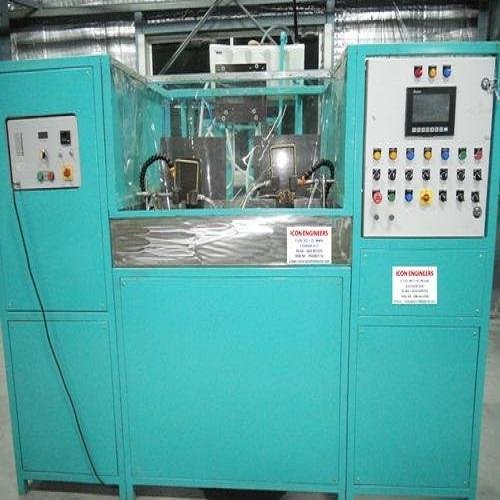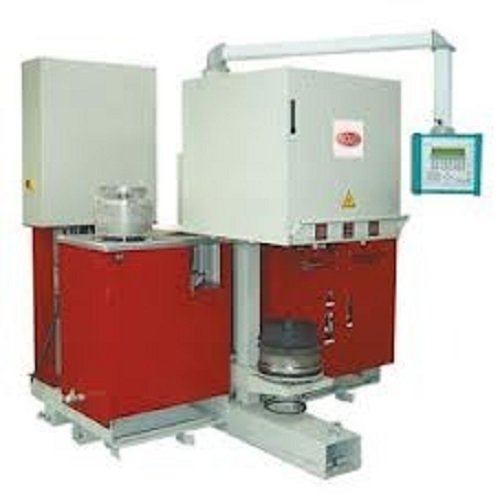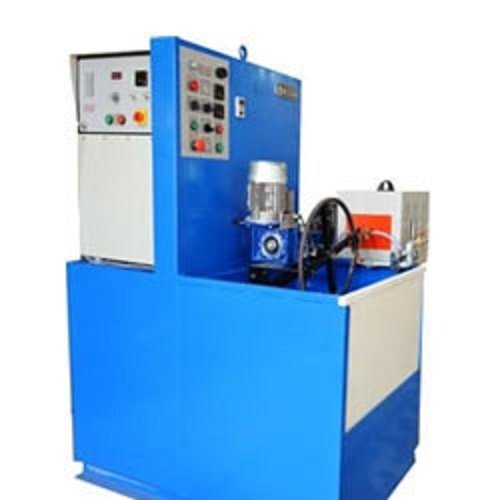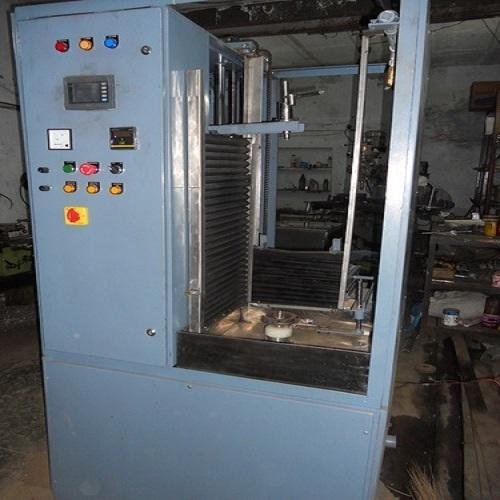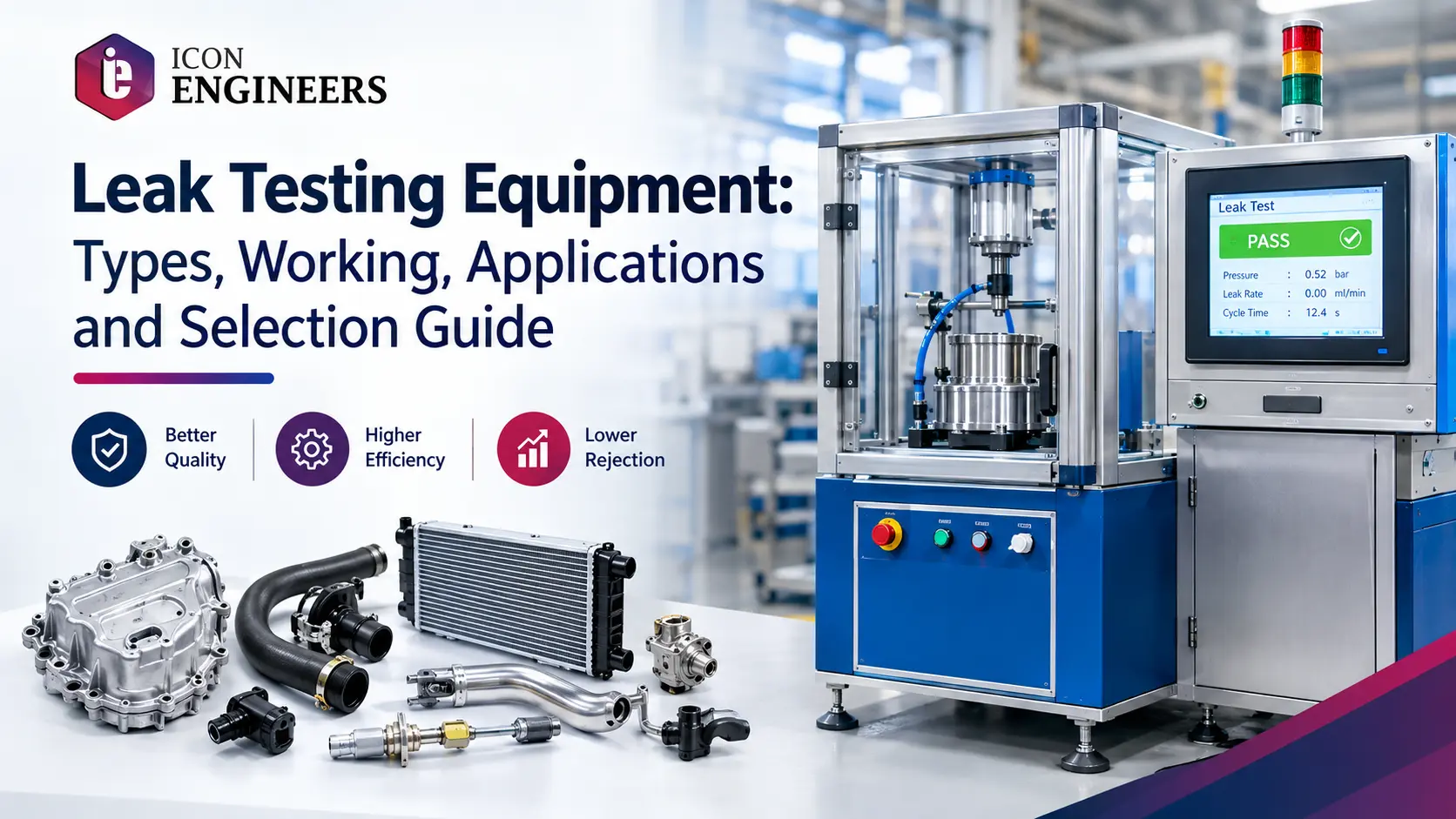
In modern manufacturing, even a very small leak can lead to product failure, safety concerns, material loss, or customer complaints. That is why manufacturers across automotive, engineering, medical, plumbing, HVAC, and other industries rely on accurate leak detection during quality inspection. Leak testing equipment helps identify unwanted leakage and confirms whether a component or finished product meets the required quality standards.
From simple pressure-based testing to automated digital systems, today’s leak testing machines are designed to provide fast, repeatable, and reliable inspection. The right system can also reduce manual inspection, improve production consistency, and minimize the chances of defective products reaching customers.
This guide explains the different types of leak test equipment, how leak testing works, its industrial applications, and the important factors to consider before selecting a machine.
What Is Leak Testing Equipment?
Leak testing equipment is used to determine whether a component, container, pipe, assembly, or enclosed product has an unwanted passage through which air, gas, liquid, or another medium can escape or enter.
Depending on the application, the test may be based on pressure loss, vacuum change, flow measurement, water immersion, or another suitable detection principle.
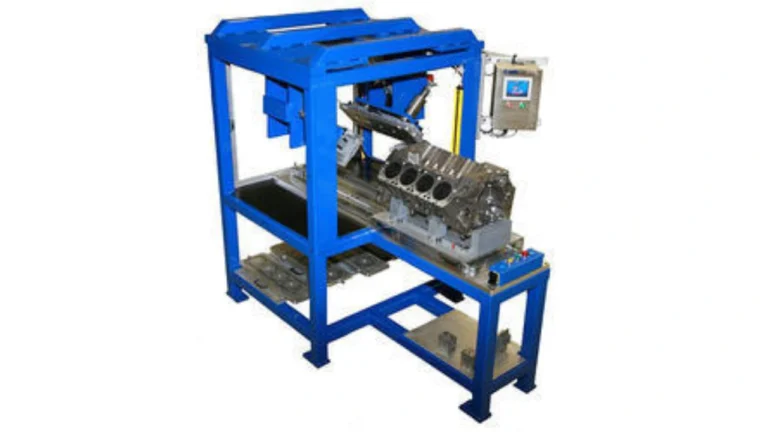
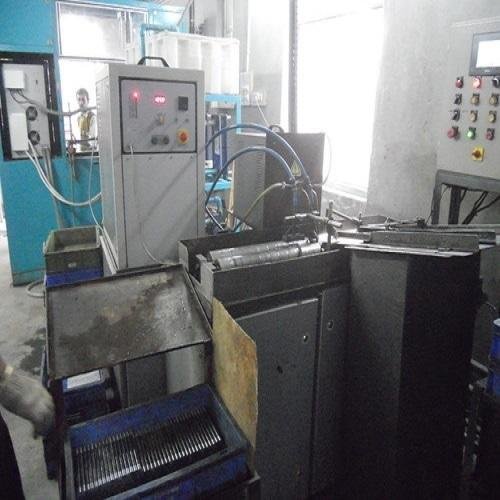
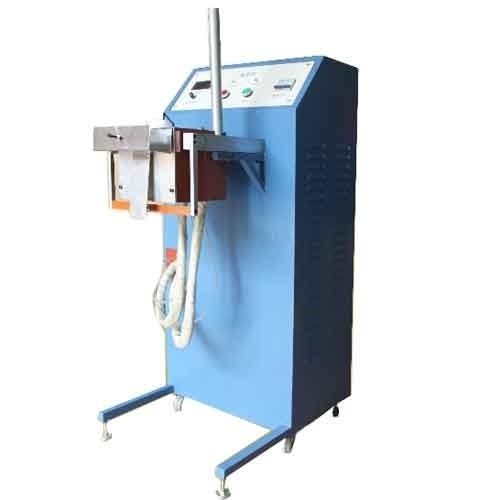
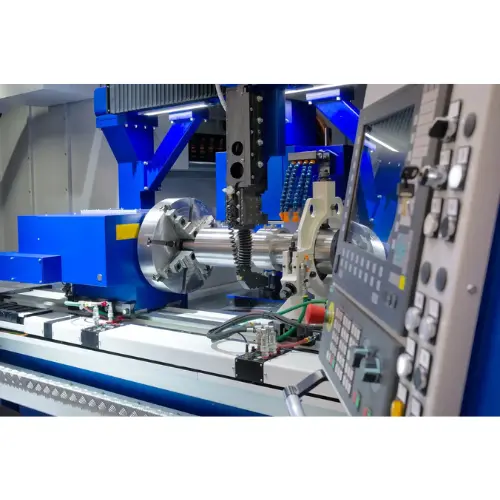
Modern leak testing machines can be configured for manual, semi-automatic, or fully automatic operation. Digital systems can monitor test parameters and provide precise results, making them particularly useful for production environments where every component needs to meet the same quality requirements.
Also Read: What is a Leak Testing Machine? Working, Types, and Industrial Applications
Why Is Leak Testing Important?
A component may look perfect from the outside and still contain a very small leak. Traditional visual inspection alone may not detect such defects. Leak testing provides a more reliable way to verify the integrity of a product.
Some important reasons for using leak test equipment include:
- Detecting manufacturing defects that may not be visible
- Preventing leakage during actual product operation
- Improving product reliability and service life
- Reducing rejection and warranty-related costs
- Maintaining consistent production quality
- Protecting sensitive components from contamination
- Supporting automated quality-control processes
For products that carry fuel, coolant, air, water, hydraulic fluid, or other media, proper leak testing becomes especially important.
How Do Leak Testing Machines Work?
Although different leak testing machines use different methods, the basic principle is straightforward.
First, the component is properly connected or sealed to the testing system. A specific test medium, such as air, is introduced into the component or the component is subjected to a controlled vacuum. The machine then monitors the selected parameters for a defined period.
If the measured pressure, vacuum, flow, or other parameter changes beyond the permitted limit, the component may be identified as leaking.
A typical automated testing cycle can include:
- Loading: The component is placed into the fixture.
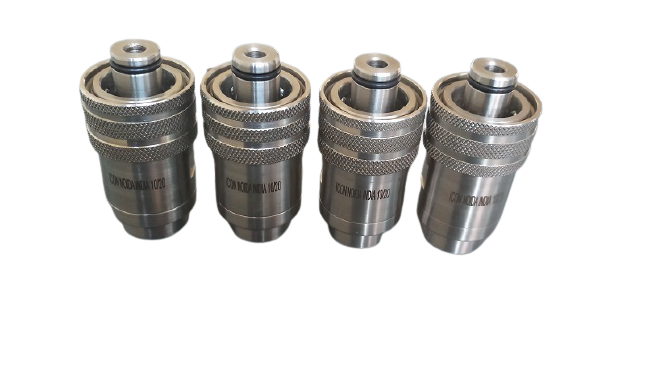
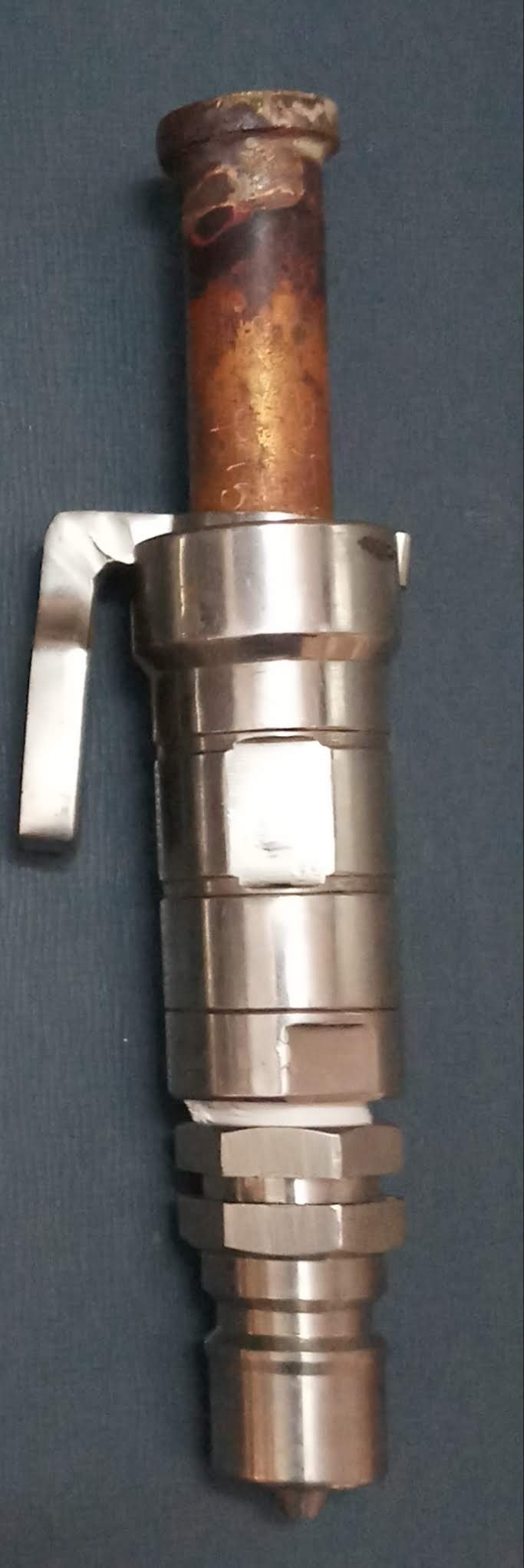
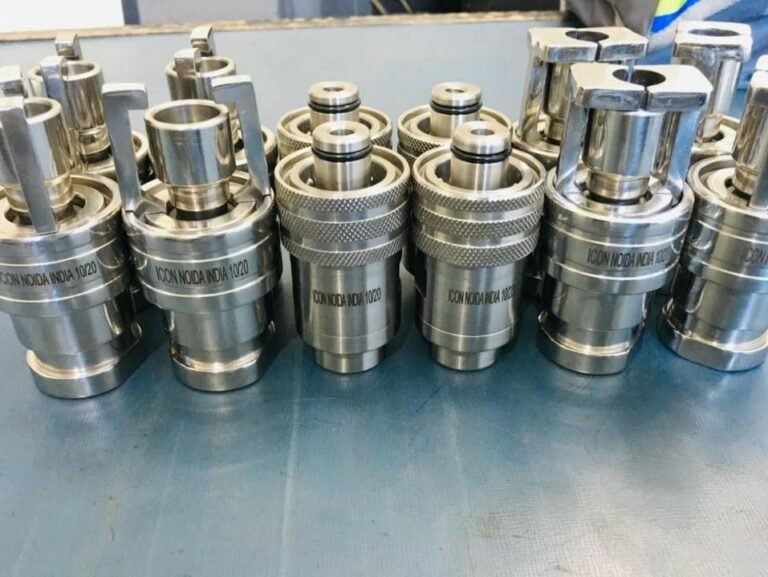
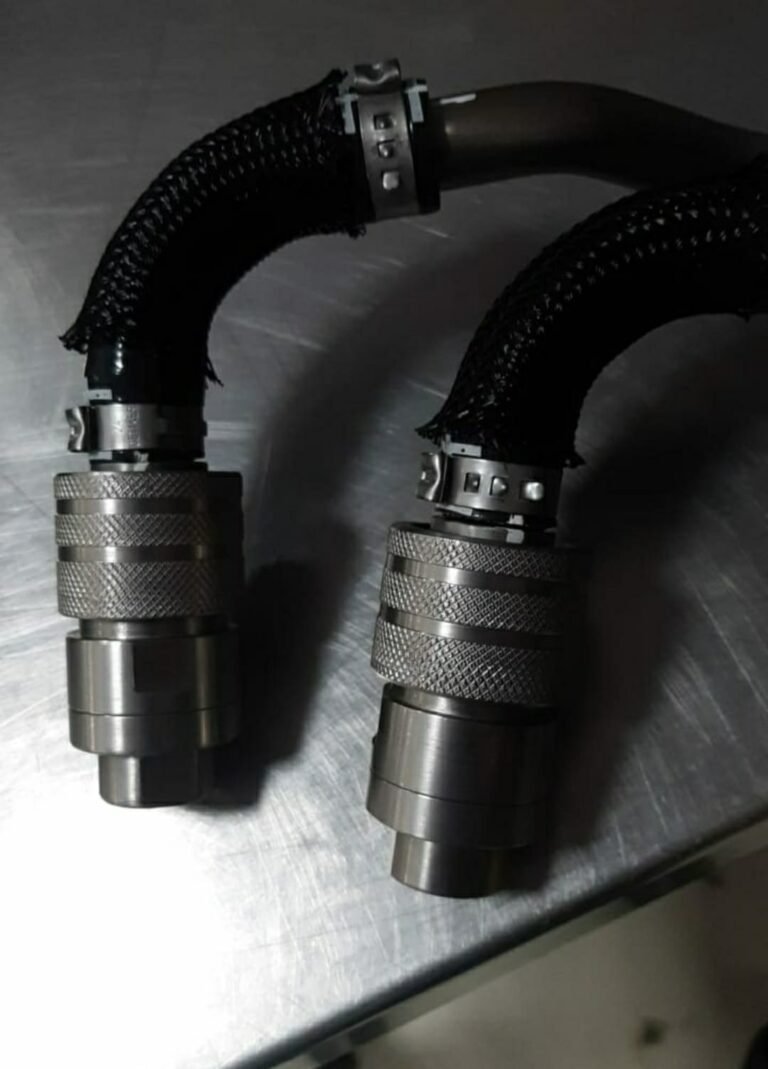
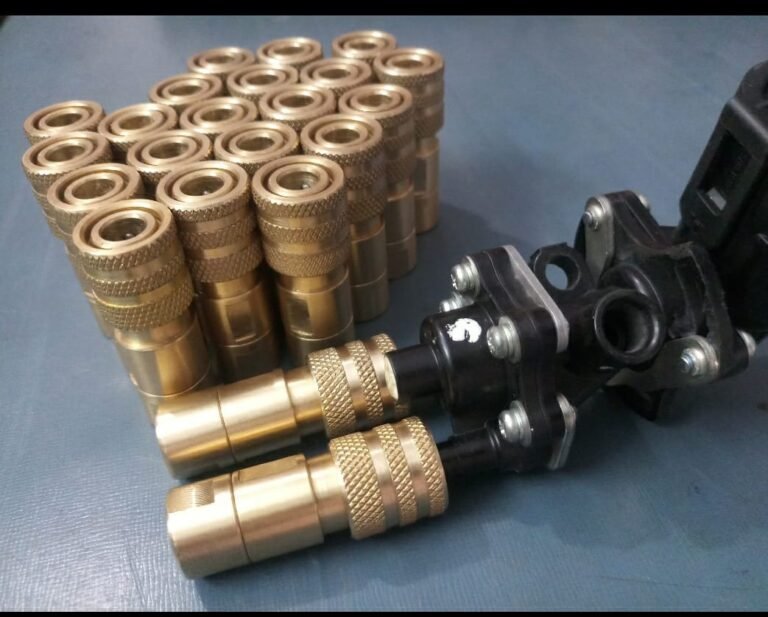
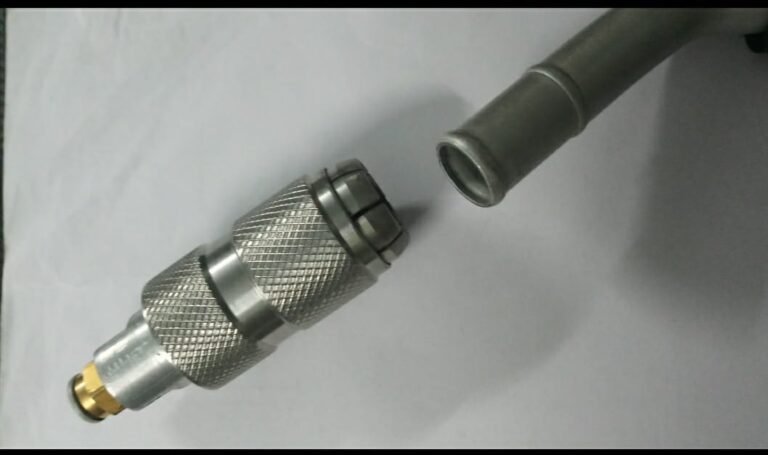
- Sealing: Suitable couplers or fixtures close the required openings.
- Filling or evacuation: Air or another test medium is introduced, or vacuum is created.
- Stabilization: The system allows the pressure to settle.
- Testing: The machine measures the relevant parameter.
- Evaluation: The measured value is compared with the preset acceptance limit.
- Result: The component is classified as pass or fail.
This controlled process helps manufacturers achieve repeatable inspection results.
Types of Leak Testing Methods
Different products require different testing approaches. The correct method depends on the component design, acceptable leak rate, production volume, and type of defect being investigated.
Pressure Decay Testing
Pressure decay testing is commonly used for components that can be sealed and pressurized. The component is filled with air to a predefined pressure, after which the system monitors pressure changes during the test period.
A pressure drop beyond the permitted limit indicates a possible leak.
This method is suitable for many industrial components and can be integrated into automated production lines.
Vacuum Leak Testing
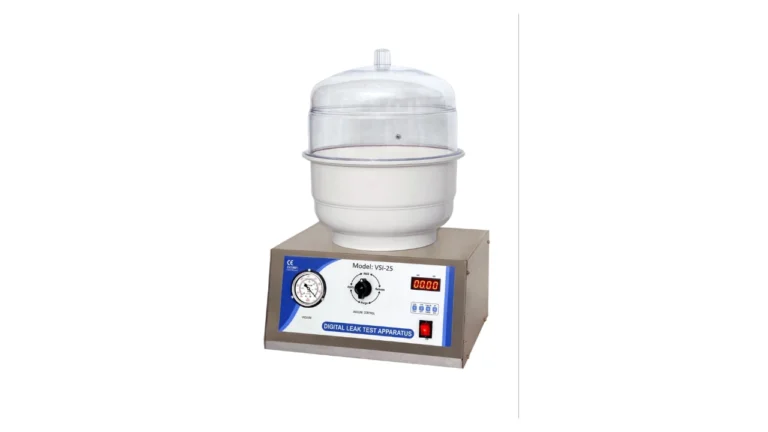
In vacuum testing, air is removed from the test component or chamber to create a controlled vacuum. The system then monitors the change over a specified period.
Vacuum-based testing can be useful when positive pressure testing is unsuitable for the product or when a particular component design requires this approach.
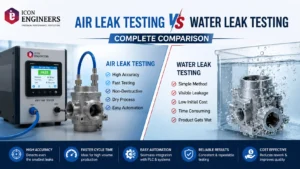
Air Leak Testing
Air leak testing uses compressed air as the test medium. It is widely used because air is readily available and the method can be integrated with digital pressure measurement systems.
Depending on the application, the machine can monitor pressure decay or another measurable parameter to determine whether the component passes the specified leakage limit.
Water Leak Testing
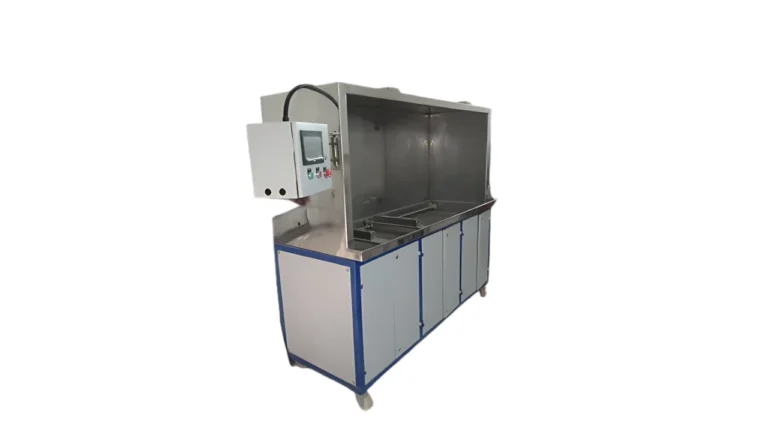
Water-based testing can be useful for products where visual identification of bubbles or water penetration is relevant. It is commonly associated with components such as tanks, containers, pipes, radiators, and other products where liquid-tightness needs to be checked. The exact testing procedure depends on the product and required quality criteria.
Helium and Advanced Leak Detection
For applications requiring extremely sensitive leak detection, specialized tracer-gas methods such as helium testing may be considered. These systems are generally used when very small leakage rates need to be identified and conventional methods are not sensitive enough.
Types of Leak Testing Equipment
The configuration of leak testing equipment can vary considerably according to production requirements. Common categories include:
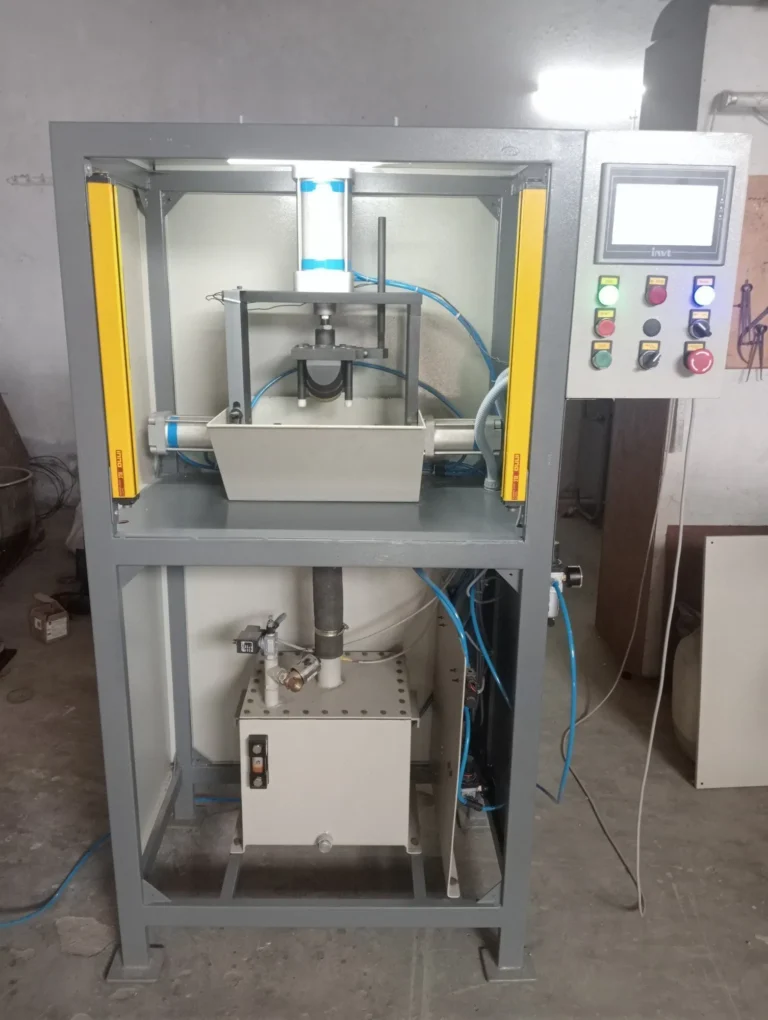
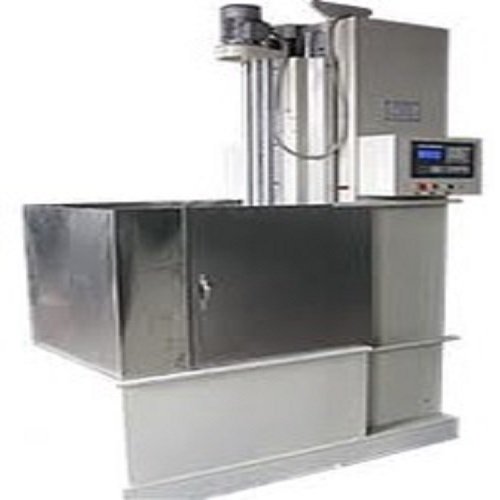
- Digital Leak Testing Machines: These systems use electronic measurement and control to provide accurate and repeatable testing.
- Water Leak Testing Machines: Designed for applications where water-based leakage inspection is required.
- Hose Leak Testing Machines: Used to check hoses and similar flexible components for leakage or pressure-related defects.
- Radiator Leak Testing Machines: Developed for testing radiators and cooling-system components to identify unwanted leakage.
- Fuel Pipe Leak Testing Machines: Used for inspecting fuel pipes and related components where reliable sealing is critical.
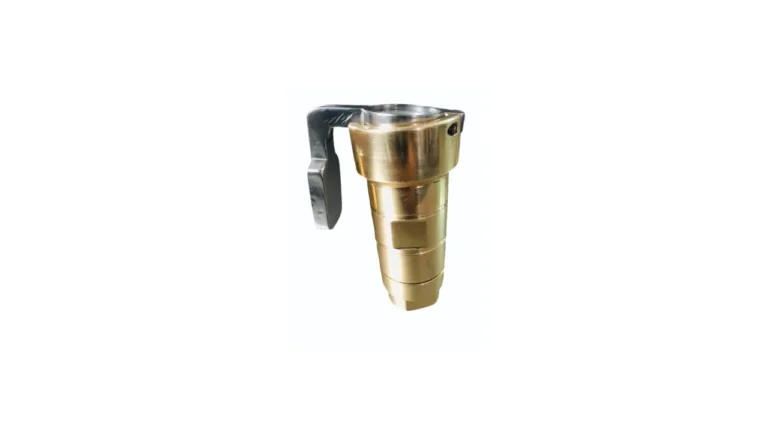
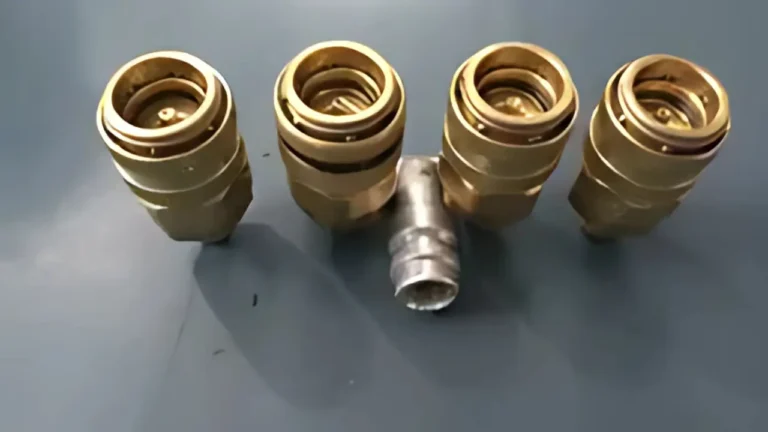
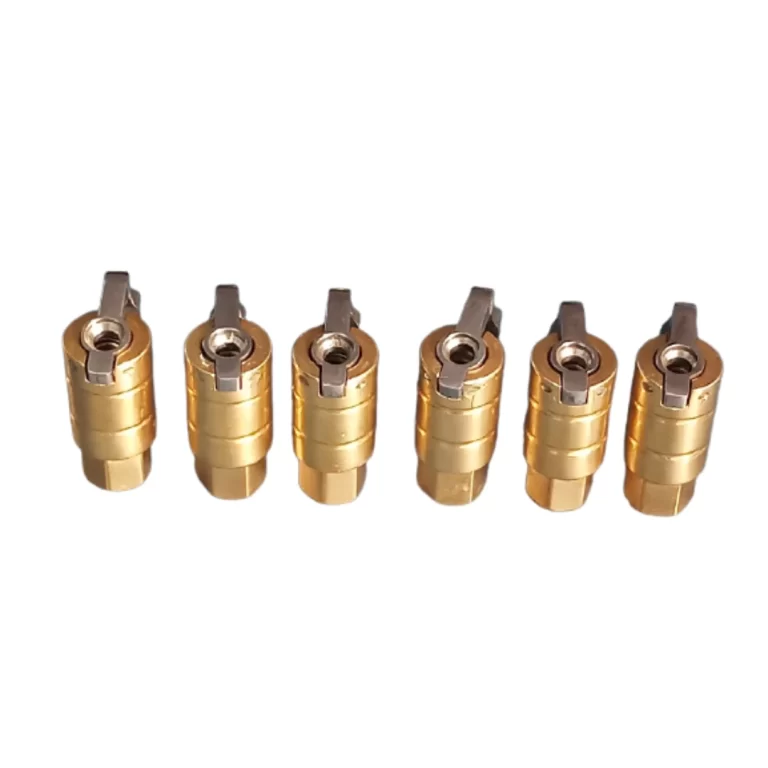
The machine configuration can also include customized fixtures, couplers, pressure circuits, sensors, control panels, and automated result recording according to the application.
Applications of Leak Testing Machines
Leak testing is used across a wide range of manufacturing industries. Some common applications include:
- Automotive components
- Radiators and cooling systems
- Fuel pipes and hoses
- Hydraulic components
- Pneumatic components
- Water tanks and containers
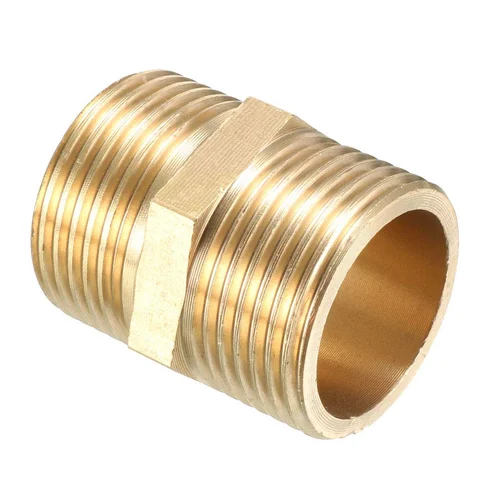
- Valves and fittings
- Tubes and pipes
- HVAC components
- Industrial assemblies
- Plastic and metal components
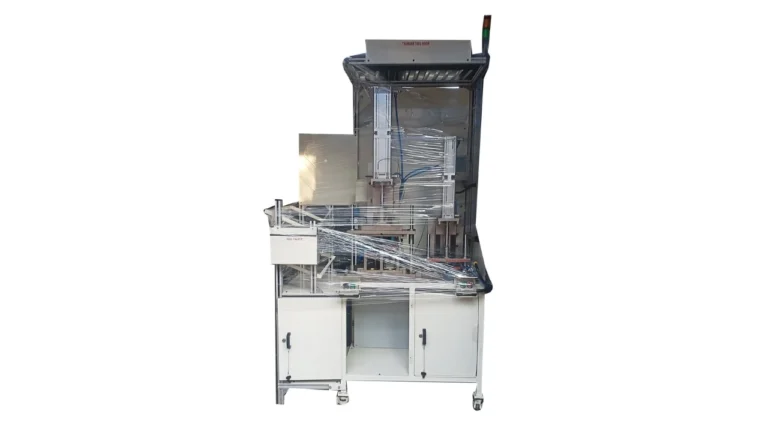
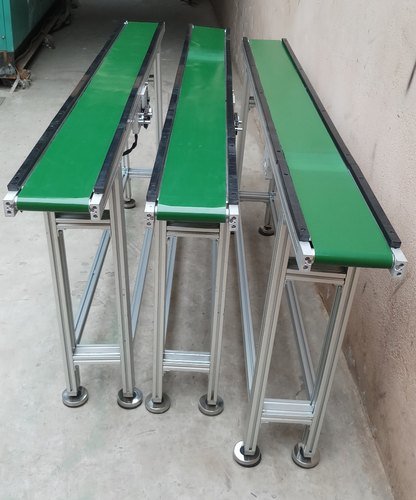
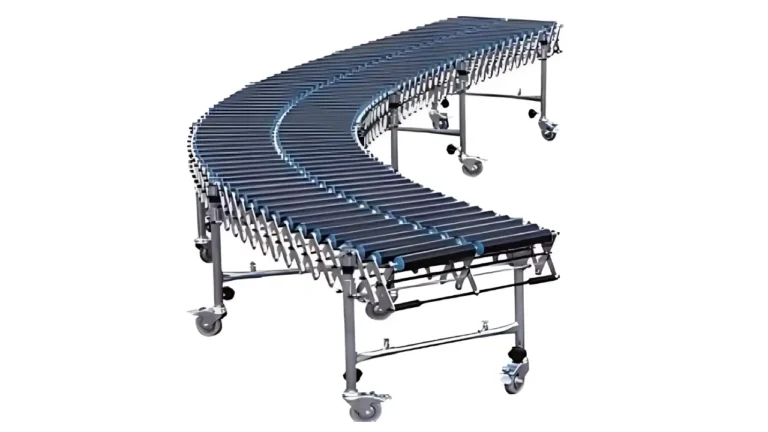
In high-volume manufacturing, automated leak testing machines can be integrated directly into the production line. This allows manufacturers to inspect products without significantly slowing down the manufacturing process.
Benefits of Using Automated Leak Test Equipment
Automation can make leak inspection more consistent and efficient, particularly when large numbers of components need to be tested.
Key benefits include:
Consistent Testing
Automated systems follow predefined test parameters, reducing variations that can occur with manual inspection.
Faster Inspection
Machines can perform testing cycles quickly, making them suitable for repetitive production environments.
Better Accuracy
Digital sensors and controlled testing sequences help provide measurable results rather than relying only on visual inspection.
Reduced Manual Handling
Automation reduces the amount of repetitive work required from operators and can improve overall workflow.
Easy Result Monitoring
Modern systems can display test pressure, test time, leakage values, and pass/fail results, depending on the configuration.
How to Choose the Right Leak Testing Equipment?
Selecting the right system starts with understanding the product and the testing requirement rather than simply choosing the most advanced machine.
Consider the following factors:
- Type of component: Determine whether you are testing a hose, pipe, radiator, tank, valve, or another assembly.
- Required leak rate: The acceptable leakage limit will influence the testing technology and measurement sensitivity.
- Test medium: Decide whether air, water, vacuum, helium, or another medium is appropriate.
- Production volume: High-volume manufacturing may require automated equipment with quick testing cycles.
- Component size: The dimensions and configuration of the product influence fixture and machine design.
- Automation level: Choose between manual, semi-automatic, and fully automatic operation according to production requirements.
- Data requirements: If quality records are important, consider equipment capable of displaying, storing, or communicating test results.
Final Thoughts
Reliable leak inspection is an important part of modern quality control. The right leak testing equipment can help manufacturers detect hidden defects, improve product reliability, reduce rejection, and maintain consistent production standards.
From pressure and vacuum testing to specialized water and tracer-gas methods, there is no single solution for every application. Choosing the right leak test equipment requires consideration of the component, acceptable leakage rate, test medium, production volume, and desired automation level.
For manufacturers handling repetitive or high-volume inspection, properly configured leak testing machines can turn leak detection into a faster, more controlled, and dependable quality-control process.